
When Is the Best Time to Schedule Blower Door Testing During a Construction Project?
- vablowerdoortestin
- Jun 20, 2025
- 3 min read
Updated: Jul 23
Blower door testing plays a vital role in today’s construction process, particularly for ensuring energy efficiency and airtight building performance. It helps identify unwanted air leaks, ensures code compliance, and supports improved indoor comfort and energy savings. But when should you schedule this test during your construction project?
If you’re building or remodeling in Virginia, knowing the optimal time for blower door testing can help you stay compliant and avoid costly delays.

What Is Blower Door Testing?
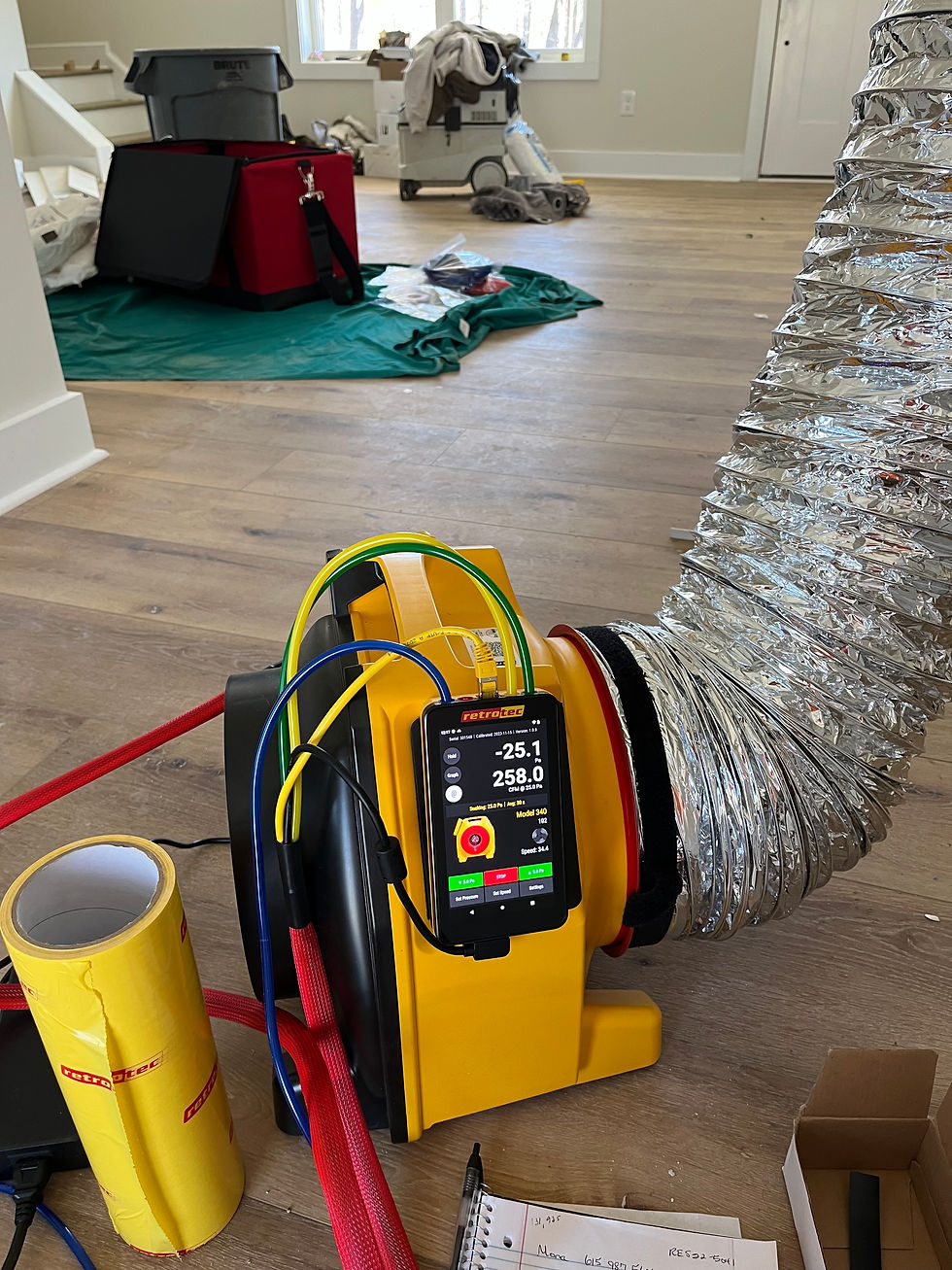
Blower door testing is a specialized method used to evaluate the airtightness of a building by identifying and measuring air leaks in the structure. A powerful fan, mounted in an exterior door frame, pulls air out of the house to lower the inside air pressure. The difference in pressure between inside and outside causes air to flow through unsealed cracks and openings, making them easier to identify.
A more airtight home means better energy efficiency, reduced utility bills, and improved indoor comfort. It also plays a major role in meeting building codes and certifications like ENERGY STAR or HERS ratings.
Why Timing Matters
When it comes to construction, timing is everything, and blower door testing is no exception. Scheduling the test too early can result in misleading results due to incomplete air sealing. On the other hand, testing too late might leave no room for corrections, leading to costly rework.
That’s why strategically planning the timing of your Virginia blower door testing is essential for a successful and smooth building process.
Ideal Time for a Blower Door Test
Timing is everything when it comes to blower door testing, and for most homes, the ideal window is right after drywall is installed. At this stage, the home’s building envelope is finally complete, especially the critical air seal between the top of the walls and the roof deck. Before drywall, there’s often no continuous barrier between conditioned space and the exterior, especially at the ceiling level. Once the drywall is up, particularly on the ceilings, it helps seal the envelope and allows for an accurate, meaningful blower door test. Testing too early can lead to false readings, while testing too late can make it harder (and more expensive) to correct any air leakage issues. That’s why scheduling your blower door test right after drywall, but before finishes go in, is the smart move for builders and homeowners alike.
Virginia Building Code Requirements
Virginia follows the International Energy Conservation Code (IECC), which includes specific requirements for building envelope tightness. As of recent updates, new residential construction projects must achieve an air leakage rate of no more than 3 air changes per hour at 50 Pascals (ACH50).
This means blower door testing isn’t just a good idea, it’s required. Working with a blower tester expert ensures you meet Virginia’s specific standards without delays or rescheduling.
Visit VA Blower Door Testing to schedule testing and learn more about meeting state compliance.
According to the 2021 International Energy Conservation Code (IECC), Section R402.4.1.2 requires that a building’s air leakage rate be verified by blower door testing, and R402.4.1.3 outlines that this must be done once the building envelope is complete.

Working with a Certified Testing Professional
Hiring a certified blower door tester is essential. A professional understands Virginia’s unique code requirements and can guide you through the process efficiently. They’ll also provide you with a detailed report outlining your results and any necessary corrections.
Before the test, be sure to:
Install all windows and exterior doors
Seal visible air leaks
Close fireplace dampers and vents
Turn off any exhaust fans or HVAC systems
By preparing your home properly, you’ll help ensure accurate test results and avoid the need for retesting.
Best Results from Virginia Blower Door Testing: Schedule Smart, Build Smarter
To get the most from your blower door test, timing is everything. While early testing during the pre-drywall phase can catch big leaks, the best time for accurate and actionable results is after insulation and sealing but before final finishes.
And of course, Virginia building codes require blower door testing during the final inspection stage. Planning your test with this schedule in mind helps prevent delays, failed inspections, and additional costs. Always check with your local building department to ensure your blower door test aligns with local code enforcement and inspection timelines.
By working with an experienced team like VA Blower Door Testing, you’ll benefit from expert insights, code-compliant results, and peace of mind during your construction project. If you’re building in Virginia, don’t wait, make blower door testing a smart part of your project timeline.
For trusted service, testing accuracy, and timely support, VA Blower Door Testing is your local partner in airtight, energy-efficient construction.

Comments