
Blower Door Testing for New Construction: Why It Matters
- vablowerdoortestin
- Aug 15, 2025
- 3 min read
Updated: Jul 23
Quick Answer: Blower door testing during new construction is essential to verify a building’s airtightness, ensuring compliance with energy codes and improving indoor comfort. Early detection of air leaks allows builders to address issues before project completion, resulting in more energy-efficient, durable, and comfortable homes. Hiring a reliable new construction blower door testing company like VA Blower Door Testing ensures accurate testing and valuable guidance throughout the building process.

What Is Blower Door Testing in New Construction?
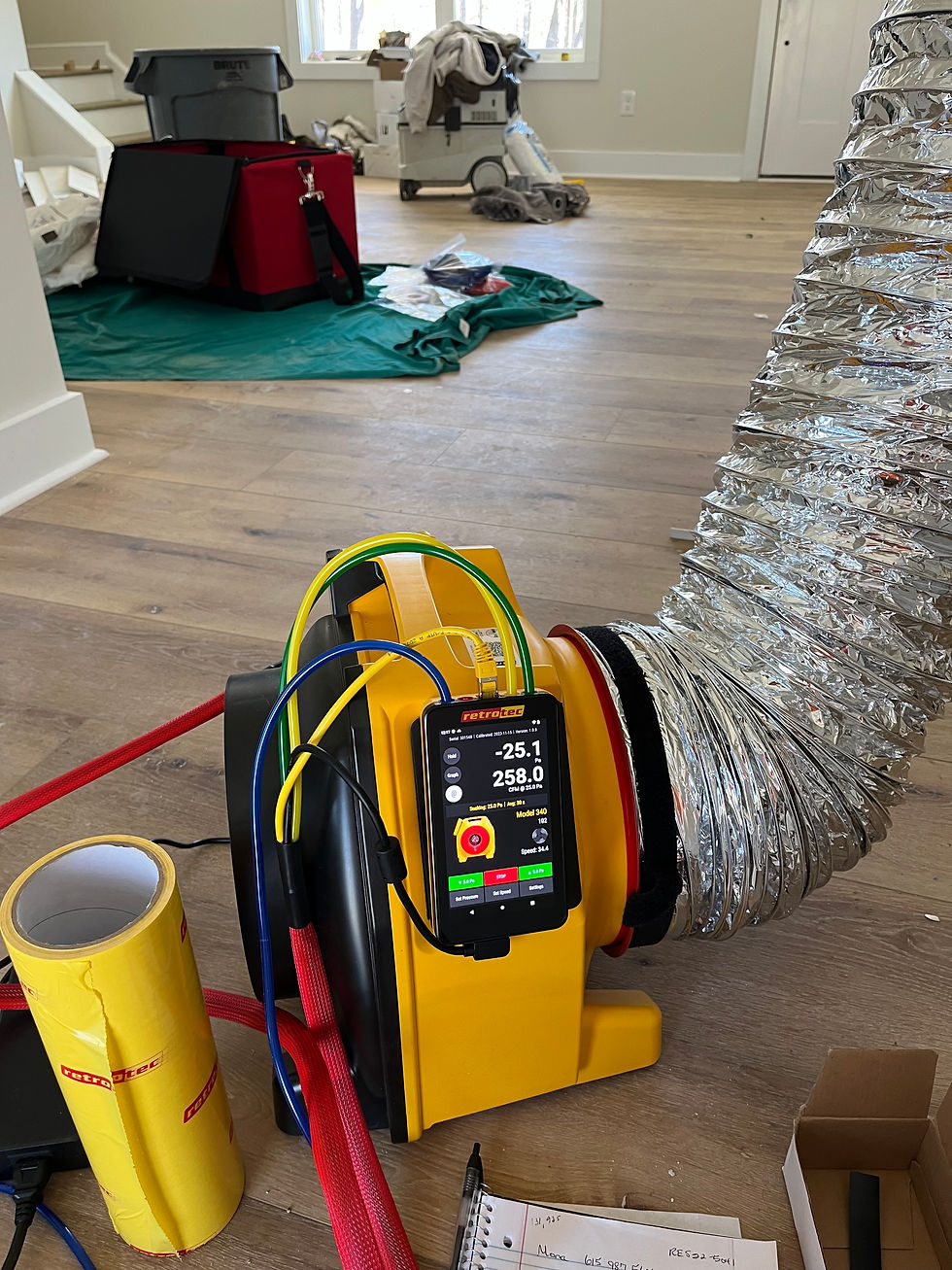
Blower door testing is a diagnostic tool used to measure how airtight a building is. During new construction, a blower door test involves installing a powerful fan in an exterior door frame to create a pressure difference inside the building. This pressure difference reveals the location and size of air leaks in the building envelope, such as around windows, doors, walls, and ceilings.
Performing this test before final finishes are applied allows builders to find and fix leaks early, preventing costly problems later.
Why Airtightness Matters in New Buildings
Meeting Energy Codes and Standards
Contemporary building codes increasingly mandate airtight construction to lower energy use.The U.S. Department of Energy and various state energy codes mandate specific airtightness levels to qualify for certification programs like ENERGY STAR and LEED.
Blower door testing provides the data needed to verify compliance with these standards. Without it, builders risk failing inspections or facing costly retrofits.
Enhancing Comfort and Indoor Air Quality
A tight building envelope prevents drafts, cold spots, and uneven temperatures, resulting in a more comfortable living space. It also limits the infiltration of outdoor pollutants, allergens, and moisture, contributing to healthier indoor air quality.
Increasing Durability and Reducing Maintenance
Air leaks can allow moisture to enter walls and ceilings, causing mold growth and structural damage over time. By ensuring airtight construction, blower door testing helps protect the building’s integrity and reduce maintenance costs.
Benefits of Working with a New Construction Blower Door Testing Company
Professional new construction blower door testing companies like VA Blower Door Testing specialize in accurate and efficient testing tailored to construction timelines. Their expertise includes:
Coordinating testing during different construction phases
Providing detailed reports and leak location maps
Offering recommendations for sealing and improvements
Ensuring compliance with local energy codes and standards
Partnering with a trusted testing company streamlines the building process and ensures energy efficiency goals are met.
When Should Blower Door Testing Be Conducted in New Construction?
Blower door testing is typically performed after the building envelope is complete but before drywall and interior finishes are installed. This timing allows for easy access to seal leaks identified during testing.
In some cases, tests may be repeated after sealing work to confirm effectiveness.
How Blower Door Testing Supports Green Building Goals
Builders focused on sustainability use blower door testing to maximize energy efficiency and minimize environmental impact. Airtight homes require less heating and cooling, reducing energy consumption and greenhouse gas emissions.
Blower door testing also helps achieve certifications that promote green building practices, appealing to environmentally conscious homeowners.
Final Thoughts on Blower Door Testing and New Construction
For new buildings, blower door testing is a critical step to ensure airtightness, meet energy codes, and deliver comfortable, durable homes. Engaging a professional new construction blower door testing company like VA Blower Door Testing early in the build process provides valuable insights that save time and money.
Investing in blower door testing during construction leads to healthier living environments and energy savings that benefit homeowners for years to come.


Comments